
Blog
Formliners for serial and small-batch production: differences
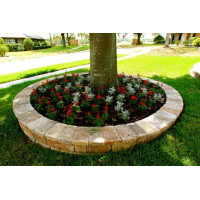
Mass production involves the manufacture of large batches of identical concrete products. In such conditions, geometric stability and relief clarity are important, as even small deviations become noticeable during assembly and installation. Formliners help to standardise the appearance of products and speed up the pouring and demoulding process.
How formliners help reduce manual labour
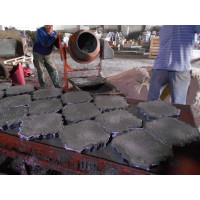
Operations such as surface levelling, texture formation and defect removal have long been performed manually and required highly skilled workers. This approach was heavily dependent on the human factor and led to inconsistent results. Even when the technology was followed, products could differ in appearance.
Formliners for fences with double-sided texture
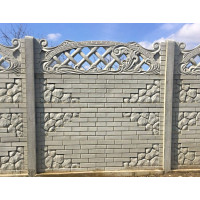
The texture on both sides of concrete fences appeared as a response to demands for both aesthetics and functionality. The fence is no longer just a boundary of the site, but has become part of the space on both sides. The equally refined surface allows you to maintain a neat appearance both from the street and from the courtyard.
Why incorrect installation of the mould liner spoils the geometry of the product
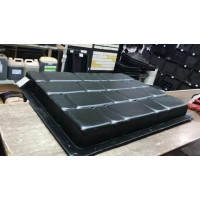
Formwork assembly is often perceived as a secondary stage, although it is precisely this stage that determines the accuracy of the future product. Even high-quality formwork cannot ensure stable results if the formliner is installed incorrectly. The slightest misalignment or skewing is immediately reflected on the concrete surface. In serial production, such errors quickly accumulate and lead to a noticeable decrease in the quality of the batch.
Formliners and requirements for vibrating equipment
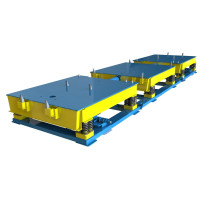
Forms are used to create textured surfaces on concrete products and allow for consistent visual results in mass production. They are used in the manufacture of wall panels, facade elements and decorative slabs. The clarity of the relief and the repeatability of the pattern depend on the quality of the formliner. With the right choice of equipment, the manufacturer can produce products with a specified texture.
Moulds for large-format facade tiles
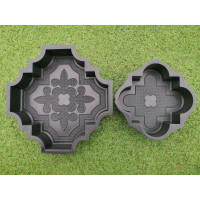
Moulds play a key role in the production of large-size facade materials. The appearance of the finished elements and the convenience of further installation depend on their geometry and stability. When working with facades, it is especially important that each tile has precise dimensions and the same thickness across its entire surface. This helps to avoid distortions and gaps on the wall. Therefore, choosing high-quality moulds is a fundamental task for any facade tile manufacturer.
Forms for fences with variable section thickness
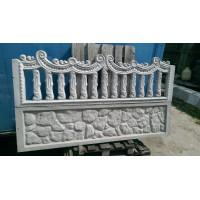
Forms with variable section thickness are highly complex. They must ensure the precise geometry of each element and remain stable during repeated use. A properly designed form allows panels of different thicknesses to be produced without compromising the quality of the finished product. The design takes into account the characteristics of the concrete mix and the pouring method.
Formliners for thin-walled concrete products
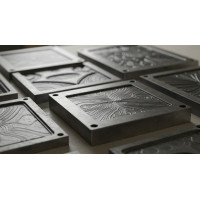
Concrete products are widely used in modern architecture and landscaping. They reduce the weight of structures and material consumption without compromising strength. At the same time, such products require high precision at all stages of production. Any deviation immediately affects the geometry and appearance.
Formliners for 3D facades: structural limitations
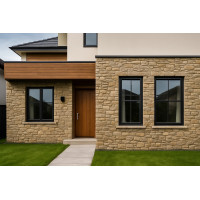
Three-dimensional facades are widely used in modern architecture, as they allow for the creation of expressive and memorable surfaces. Three-dimensional elements create an interplay of light and shadow, making the building appear more complex and expensive. However, it is precisely the depth and complexity of the relief that pose the main technological challenge. Not every form is capable of correctly conveying such a pattern without loss of quality.